Showing posts with label synthesizer. Show all posts

Friday, December 27, 2019

Digital Album: Music of the Lake


In April of 2019 I was asked to collaborate on a video blog project with local artist Sybille Muschik. In addition to filming and editing, I was asked to write original music for the series. The initial brief was that it should be upbeat and interesting: nothing that would put people to sleep. As I spent more time at Sybille's lake-shore home, the lake itself became a focus of the music. Over a period of months, sounds that evoke water, and field recordings from the lake itself (and other bodies of water), were woven into instrumental songs that referenced aspects or experiences of the lake and surrounding watershed.

In the few weeks after our initial meeting I created a series of short musical sketches. These consisted of basic drum patterns, chord progressions on virtual Rhodes electric piano or synthesizer, synth or piano melodies, and bass guitar parts. I chose fifteen to present to Sybille, who then whittled them down to eight, including one that would become the theme song. I rejected a further two, finding them uninspiring in the end! Perhaps I'll share some of these sketches in the future.

After developing the initial six songs, I had a clearer idea of Sybille's tastes and the direction the music should go. I presented the remainder of the songs as finished pieces.

We never discussed how many songs there should be, but I tend to think in terms of albums (or EP's at the very least), and inspiration led me to eleven. Each one pushed me creatively in many ways. I played bass guitar on all but one track (the most I've ever used on an album). I strove to make sampled drum machines sound more like real drums: both sonically and in the way that they're programmed. I made synths sound like guitars, and played real guitar when it was within my abilities. I scoured my backlog of field recordings for water and nature sounds and collected more in the field. I even made an orchestral song without an orchestra! But perhaps the biggest challenge was to work in different styles and moods than I have before.

This is my first paying soundtrack job. The entire process has been fun and exciting. There's scope for a 'volume two' after a well-deserved break. The lake continues to inspire through the changing seasons and as my knowledge of its biodiversity expands.

Bandcamp Player:

Track by track commentary:

1. Sunbursts (Shoreline Theme)
Out of four sketches with potential for theme songs, this was the most energetic. The working title was simply 'theme 3, piano'. The twinkly arpeggio suggested the bright sunbursts reflecting off water on a sunny day. The short version of the theme is essentially what I would call the chorus. Coming up with a 'verse' to accompany it was a challenge.

2. Pond Skaters
This changed considerably from my sketch. The signature bubbly bell sound is based on a preset  from a virtual synth called Firebird. There is a random element to the patch, which means it sounds different every time the song plays live in my workstation or is rendered as a mixdown. In order to even come close to how a pivotal mixdown sounded, I had to 'print' multiple takes of the Firebird parts and choose the best passages. The title was inspired by a large swarm of whirligig beetles skating on the water.

Video:


3. Blackbird Bend
In March, before I even started on this project, I spent an hour on a frosty morning in a wooded area by the lake, capturing the dawn chorus with my Tascam digital recorder. The principle songbirds I sought were the red-winged blackbirds. A snippet of that recording is the ambient backdrop for this song.

4. In the Rushes
This is the first song I came with up on my own initiative, as it were, having completed the first six Sybille had chosen from my sketches. After hearing Pan's Blessing she expressed a wish that there was more variation to the melody. Rather than rework that song, I wrote this instead. It's also the first piece written with a facet of the lake in mind: the rushes that grow along the shoreline, the water that laps between their stalks, the sound they make in the wind, and the insects and marine-life that live among them.

5. Spawning Beds
I was privileged to see (and film) trout spawning in the creek that runs out of the lake. This song is inspired by them, and the erratic way they swim in the fast-moving water above the weir. It was Sybille's idea to include a recording of the creek itself.

6. Surface Patterns
Since embarking on this project I couldn't help but write a laid-back piece evoking the swirling and undulating nature of water and the varied and mesmerizing patterns on the water's surface.

7. Pan's Blessing 
As it was spring when I started Music of the Lake, I took inspiration from the process of thawing, the return of plant and animal-life to the area, and the warm feeling of celebration it brings. The pan pipe sound was a last-minute addition inspired by the title.

8. Water Lilies (Yellow)
As the soundtrack was nearing completion, Sybille requested I write a piece about the water lilies found in the lake, of which there are two species. We went canoeing to photograph them (the yellow variety graces the album cover), and to check on their health. The yellow water lily is endemic to the lake, and in danger of being choked out by the white (or 'fragrant'), which is introduced. I chose an ethnic instrument akin to a kalimba, some soft Rhodes piano, and mellow synthesizer to represent the yellow species and its vulnerability.

9. Water Lilies (White)
For the white water lily, I chose a bolder palette: harps that evoke an air of royalty, strings that suggest the conquest of the lake by spreading leaves and rhizomes, and isolated twinkles from the synthesizer to represent white blooms breaking through the carpet of green. The chime tree that accompanies both water lily pieces represents motion, in this case the gentle undulation of lily pads upon the water.

10. Damselflies
At the peak of their hatching, you may see hundreds of brilliant blue damselflies hovering at lake's edge. This song is for them and their larger dragonfly cousins. If you detect a similarity in sound and style to 'In the Rushes' it's because both songs were made in tandem. With my Rhodes emulation running through a delay effect, several layers of rhythm and melody were built up to form the backbone of both songs.


11. Paddling
Sybille liked the idea of an orchestral piece, so I put my mind to it. Nothing came to me for about a week, and then I wrote and orchestrated this in about three hours flat (though it took longer to finesse and add finishing touches). The sounds of canoeing and loon calls were recorded on a camping trip with my band-mate, Gary Hartley.

Music of the Lake is available on bandcamp and all major digital distributors except G**gle.

Video - Shoreline Studio Video Blog Episode 1A:

You can check out the rest of Sybille Muschik's Shoreline Studio Video Blog here, and find out more about her work at www.sybillemuschik.com.


Thursday, August 22, 2019

Korg DW-8000 Restoration


Korg DW-8000, cleaned and up-and-running.
Back in February of 2018 I wrote this post about a new-old addition to the studio, a poorly Korg DW-8000. I got a good deal on it, but it was in need of some work; to whit: the internal battery needed replacing, some of the buttons weren't very responsive, the keyboard 'action' was quite horrible (and felt like it was bunged up with grit), and the synth was generally filthy. Indeed, since purchasing it, I refrained from programming any sounds because of the battery issue and sticky buttons that turned saving patches into Russian Roulette.

Today, I'm pleased to announce that all the issues listed above have been addressed, to the best of my abilities. There wasn't a lot I could do to improve the key-bed, but I've at least cleaned and re-felted it.

What follows is an illustrated tour. Perhaps it will help you service your own DW-8000 some day. I found the following links indispensable during the process: Korg DW-8000 battery replacment @ pallium.com and this thread on Gearslutz.com about disassembling the keybed.
 
First I opened it up. Several screws (and two rubber feet) are missing from the bottom of my DW-8000 so there aren't as many screws to remove as there ought to be! I found it helpful to draw a map of where they go. I didn't do this with the internal screws, although I probably should have: instead opting to keep them grouped in separate containers.

It soon became apparent that to effect all my repairs I'd have to completely separate the two halves of the synth. This required unplugging approx. ten connectors connecting the lower circuit-boards to the upper, and unscrewing the power button/connector mount. The circuit-board with the backup battery attached was then completely removed so I could de-solder the old battery and fit a battery holder. If I'd given it more thought, I'd have extended the leads of the battery holder so that I could hot-glue it to the chassis. I made do with zip-tying it to one of the wire bundles.

The bottom-half, separated. The board with the battery is the center one.
Replacement battery holder (photo taken after reassembly).
Next I tackled the buttons or 'tact switches'. To get to these I had to remove all the circuit boards and key-bed from the upper half of the synth (being careful to use an anti-static bag where necessary, and wear a grounding strap). The task was a little daunting, to say the least, but it also allowed me to give the plastic casing of the synth a proper clean. I started with undiluted Mr. Clean on a damp cloth, and was not surprised to see it remove copious amounts of brown tobacco residue. The casing was then rinsed thoroughly outdoors (inside and out) with the garden sprayer to remove cleaner residue and dust from crevices.

Outer casing after cleaning.
Now having access to the switches, I could go about cleaning them. I wasn't game to remove the proprietary caps, and thankfully it wasn't necessary. If you're gentle with the pressure, you can carefully drip DeOxit D5 into the hairline gap where the two moving parts of the switch meet. The trick is then to work the switch a bunch of times, and drip a little more as you go. Don't be afraid if it dribbles onto the circuit-board. It took a few passes to completely swab it away when I was done, and I turned the boards upside down for a while to let any excess drip away. As an added bonus, the excess liquid helped remove more tobacco residue from the circuit boards. The four sliders were also treated, with DeOxit FaderLube.

The innards removed, tact-switches exposed.
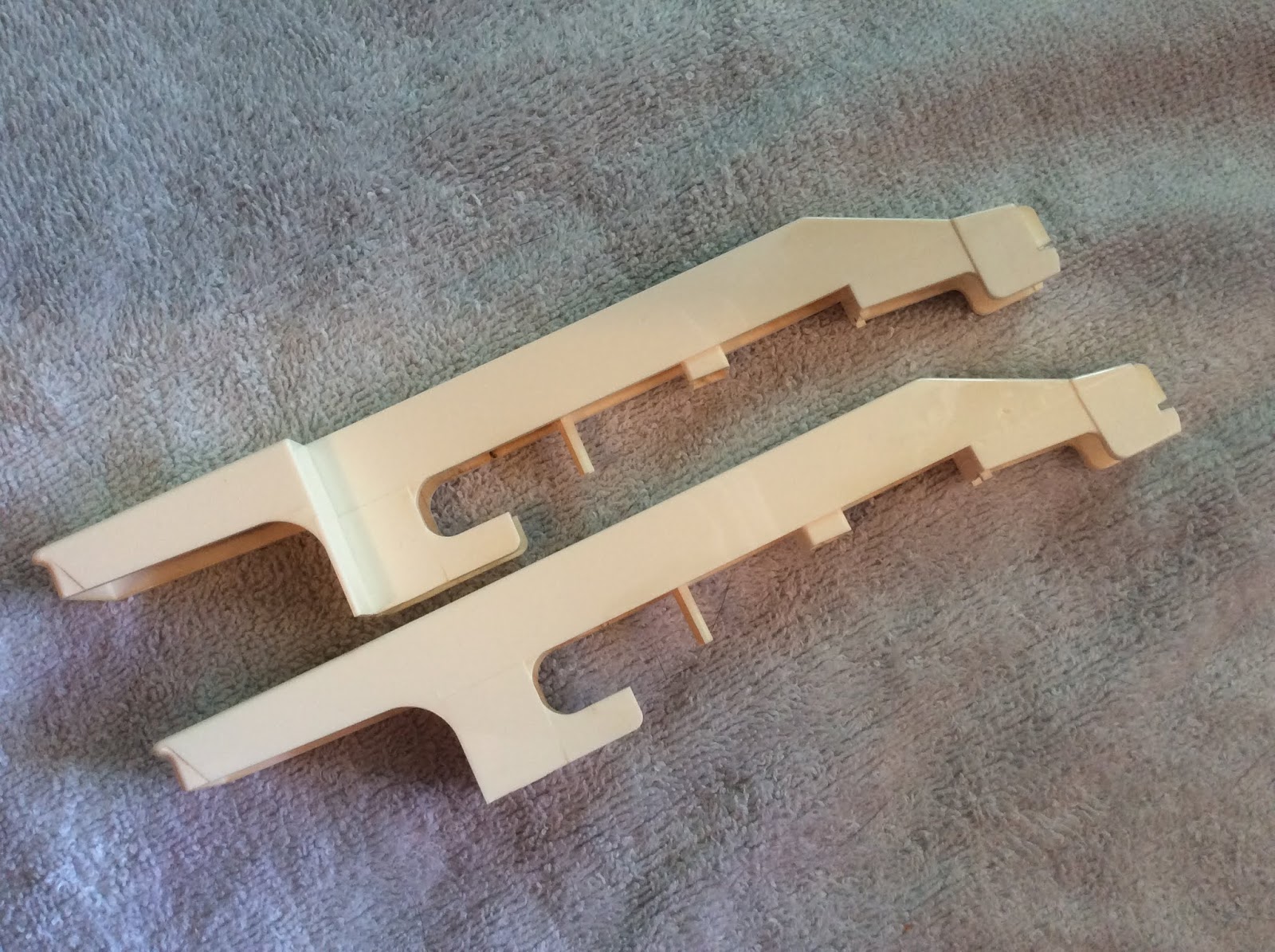
Next I worked on the key-bed. Every key was removed from the frame. I found it easiest to turn it upside down for this step, removing white keys first, then black. If you wiggle a small flat-head screwdriver between the prongs where the key hinges while pulling the key towards you it will loosen its grip and the key will drop out (oftentimes a little push on the clamping part helps it along). This way the little spring clip that holds the key in place drops into the body of the key when you remove it, making it easy to retrieve. The clamping prongs have long been broken on three of the keys, and there's not much I can do about that beyond replacing the keys altogether. Perhaps another time. They still work but are just a little wonky. I somehow managed to snap one of the struts that presses down on the key contacts while removing one key, and repaired it with epoxy and a piece of paperclip for reinforcement. It amazes me that a part so integral to the working of the keyboard is relatively thin and easily breakable, compared to the rest of the key.

Removing the keys.

Keys removed.
 Each key was individually washed, in a solution of Mr. Clean and hot water, then rinsed in plain hot water and dried. This took about an hour, but was worth it. The keys were absolutely filthy: the sides felt like sticky sandpaper.

Brown!
After cleaning.
The metal frame was similarly grubby. Dirt, detritus, the ubiquitous tobacco goo, and quite a bit of rust was caked on it. I also gave it a wipe down and hit it with a bit of compressed air.

The initial state of the keyboard frame. The brown lines correspond to gaps in the keys.
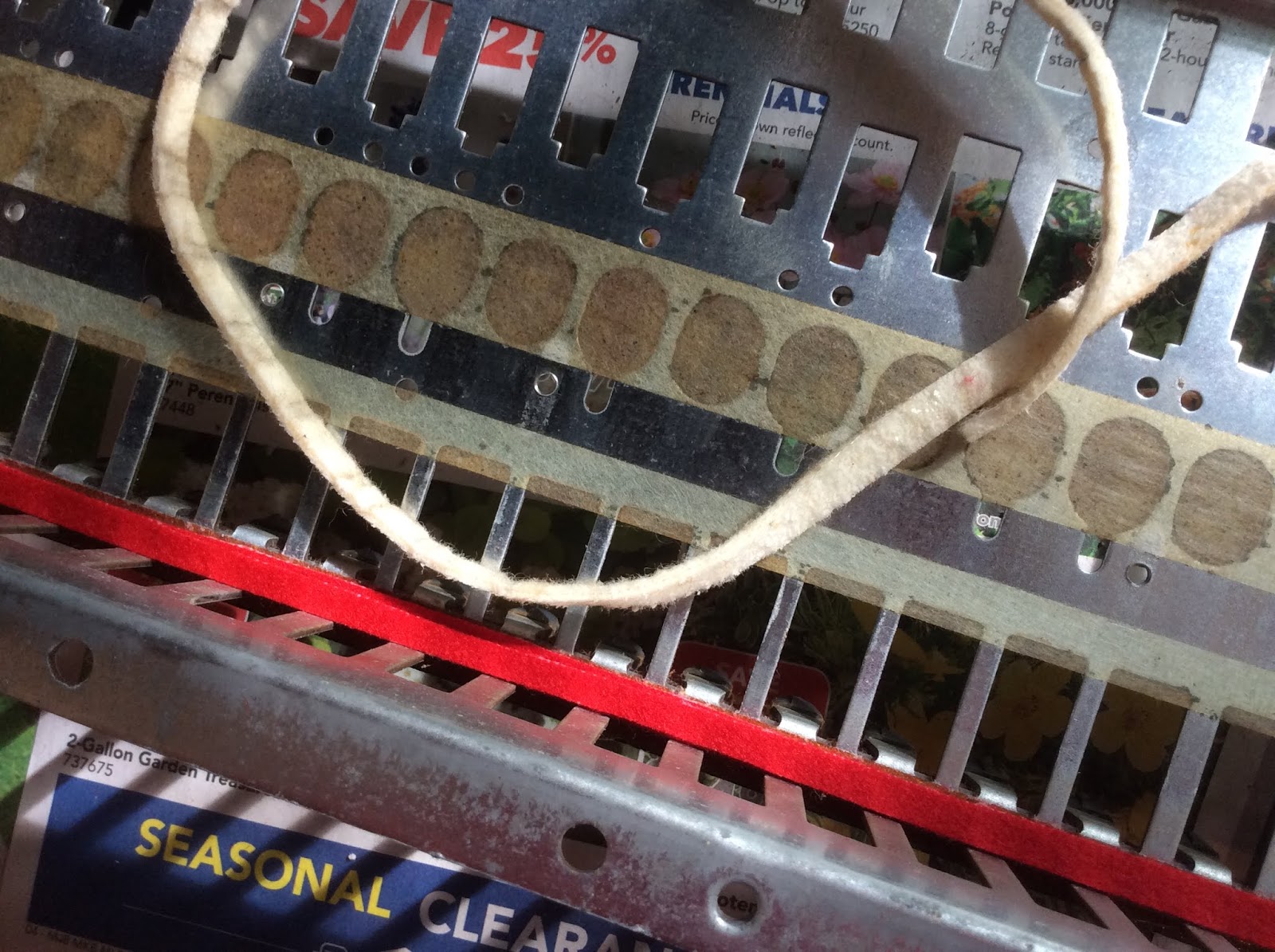
Before reassembly, I replaced the action felt underneath the key-bed. I was keen to replace the top layer, too, but as there's a conductive strip underneath for controlling aftertouch, as well as a layer of some sort of rubber, I left it as-is. The felt I ordered turned out to be half the thickness of the original, so I cut it in half and doubled it. The action is still not amazing, but just having clean keys makes it so much nicer.

New felt.
New felt vs. old felt.
I addressed the cigarette burns in the two very top keys (see the previous DW-8000 post) by carefully shaving the lumps down with a Stanley knife and hitting them with a bit of fine-grit sandpaper (masking off with tape first). They're not 100%, but most of the deformation and discoloration is gone and they're much nicer to look at.

Treated cigarette burn.
Each key contact has a little rubber pad that the key presses down on. These were covered in gunk, but as their function is mechanical rather than electrical, it wasn't necessary to clean them. In the interest of being thorough, I gave them a swab with some distilled water. I cleaned the rest of the contact assembly circuit-board while I was at it, at least to get the worst of the gunk off.

Key contact assembly: note gunk on black rubber pads and black specks on circuit board.
Not perfect, but here's how it came up after swabbing.
Last but not least, it was time to put everything back together. The key-bed was reassembled in reverse order: black keys first, then white; aftertouch board reattached, all circuit-boards re-housed in casing, key-bed re-seated, and finally the connectors plugged back into the lower half of the keyboard, battery installed, and everything screwed back together.

Circuit-boards going back in.
Key-bed reassembly.
Reinstalling the key clips. I recommend wearing gloves to spare your fingers!
Key-bed reassembled.
Ready to reattach connectors. Note the labels so I could get them back in the right spot!


With everything back together, came the moment of truth. Does it still work? Were my improvements a success? Thankfully, yes on both counts. It powered on with no issues. Without the presets loaded into memory, it made a pitch drop sound upon pressing a key. I sampled this sound on middle C, C2 and C1 for posterity. I'll be providing free downloads via freesound.org in a future edit of this post.

The Korg DW-8000 is equipped with MIDI, but I was unable to find the Bank A factory presets in sysex format anywhere on the web. However, an audio file in machine language can be found here, and was successfully loaded via the tape data input.

I'll leave you with this short video: factory program number 77 proving a successful re-loading of the factory presets and fully functioning unit!

Monday, June 18, 2012

New Equipment: Roland HS-60


The Roland HS-60 is an analogue synthesizer with digitally-controlled oscillators (meaning they aren't prone to drifting out of tune like fully analogue oscillators have been known to). In effect, this is the same synthesizer as the Juno 106 (in Japan this model was marketed as the Juno 106S), but with built-in stereo speakers and an amplifier to drive them

This example was rescued from a thrift store, and works surprisingly well considering it was made in 1984 and doesn't appear to have ever been serviced. All six voices (which equate to the number of notes you can play at once) work, and the patch storage memory is intact. Two sliders were bent and the cap was missing from one, some lint and other gunge had built-up inside the end-cheeks, and there was some goo resembling congealed cola on the casing here and there. All this cleaned up nicely.

There's still an issue with the wiring inside: one of the connectors refuses to remain seated, and it affects the speakers and outputs. For now I have mono output, so I can't make full use of the chorus effect (which is stereo). Also, the Decay slider in the ADSR envelope is only 50% functional.

I've already made use of it on a track. There'll be more about that later in the week. For those interested in a look at the maintenance work, you can find the pictures and write-up on my website: www.manitouslair.com (Zone 2, in the 'Studio' section), or follow this direct link.