Monday, August 26, 2019

Roland JV-2080 Review

The JV-2080, a ROMpler from 1997.
I'm a little late in posting anything about the JV-2080, which I bought a couple of years ago. This is by no means an in-depth review, as I'm never likely to tap into its full potential. I'm not interested in programming it, for instance, as it requires a lot of menu-diving, pressing of buttons, and scrolling with a single encoder knob. For that matter, the kind of sounds I like to make are best made on analog machines. So why do I have this? Quite simply, for immediate access to (fairly) realistic sounds of real-world instruments.

I'm not very good on acoustic guitar, for example, and if I want a nice mellow arpeggiated guitar part for a track, it's obtainable with the JV-2080. It's never going to sound as good as a real acoustic guitar, of course, but as an embellishment for an otherwise electronic track it works very well.

Another example. A recent project required a vibraphone. Now, a vibraphone is a gigantic instrument that I'd never be able to get into the studio, even if I could find one locally. The JV-2080 has an authentic-sounding vibraphone, and all it needed was some vibrato from one of the on-board LFOs to make it sound like the motor was engaged. Small edits of a sound, such as the aforementioned vibrato, or longer/shorter decay are easily accomplished, and on-board effects can be turned on or off via the front panel.

There are an insane amount of sounds on-board (640 presets, 128 user) that cover the basics and even a few instruments you might not think of. There's even a banjo, though it fails to come close to a real one.

I recently wrote an orchestral piece (albeit fake orchestra), and found myself wishing I had a wider range of orchestral sounds in my arsenal. With that in mind, I hunted around online for the Orchestral expansion card: one of many made for this and other Roland units. There are eight slots under the removable panel on top of the unit for these cards. Mine actually has stickers for the Orchestral and Special FX expansions on top, but they were taken out at some point and likely sold individually or kept by a previous owner.

In my online researches, I discovered that Roland issued a 'cease usage' warning for all SR-JV80 expansion cards in 2017, because the electrolyte from the 20 year-old capacitor mounted to each board has a tendency to leak, leading to smoke, fire, and in worst-case scenarios, explosions! What to do? Thankfully replacing the capacitor with a new one is not difficult if you're patient and competent with a soldering iron. Refurbishing two expansion boards took me about 45 minutes. Thanks must go to Don Solaris for his instruction video on how to do this. My JV-2080 is now fitted with the freshly refurbished Orchestral and World expansion boards.

Expansion boards after refurbishment. Note the old capacitors in the foreground.
Since SR-JV80 expansion cards aren't easy to find in brand new condition these days, the two I ordered were both missing the original boxes. I wasn't sure what I needed in order to mount them (screws, for instance). Thankfully, fitting them is straightforward: once you unscrew the panel, you just press the cards into place. Each card fits into a data-port type slot, and is held by three plastic pegs sticking out of the JV-2080's innards.

Orchestral and World boards snug in their new home.

Thursday, August 22, 2019

Korg DW-8000 Restoration


Korg DW-8000, cleaned and up-and-running.
Back in February of 2018 I wrote this post about a new-old addition to the studio, a poorly Korg DW-8000. I got a good deal on it, but it was in need of some work; to whit: the internal battery needed replacing, some of the buttons weren't very responsive, the keyboard 'action' was quite horrible (and felt like it was bunged up with grit), and the synth was generally filthy. Indeed, since purchasing it, I refrained from programming any sounds because of the battery issue and sticky buttons that turned saving patches into Russian Roulette.

Today, I'm pleased to announce that all the issues listed above have been addressed, to the best of my abilities. There wasn't a lot I could do to improve the key-bed, but I've at least cleaned and re-felted it.

What follows is an illustrated tour. Perhaps it will help you service your own DW-8000 some day. I found the following links indispensable during the process: Korg DW-8000 battery replacment @ pallium.com and this thread on Gearslutz.com about disassembling the keybed.
 
First I opened it up. Several screws (and two rubber feet) are missing from the bottom of my DW-8000 so there aren't as many screws to remove as there ought to be! I found it helpful to draw a map of where they go. I didn't do this with the internal screws, although I probably should have: instead opting to keep them grouped in separate containers.

It soon became apparent that to effect all my repairs I'd have to completely separate the two halves of the synth. This required unplugging approx. ten connectors connecting the lower circuit-boards to the upper, and unscrewing the power button/connector mount. The circuit-board with the backup battery attached was then completely removed so I could de-solder the old battery and fit a battery holder. If I'd given it more thought, I'd have extended the leads of the battery holder so that I could hot-glue it to the chassis. I made do with zip-tying it to one of the wire bundles.

The bottom-half, separated. The board with the battery is the center one.
Replacement battery holder (photo taken after reassembly).
Next I tackled the buttons or 'tact switches'. To get to these I had to remove all the circuit boards and key-bed from the upper half of the synth (being careful to use an anti-static bag where necessary, and wear a grounding strap). The task was a little daunting, to say the least, but it also allowed me to give the plastic casing of the synth a proper clean. I started with undiluted Mr. Clean on a damp cloth, and was not surprised to see it remove copious amounts of brown tobacco residue. The casing was then rinsed thoroughly outdoors (inside and out) with the garden sprayer to remove cleaner residue and dust from crevices.

Outer casing after cleaning.
Now having access to the switches, I could go about cleaning them. I wasn't game to remove the proprietary caps, and thankfully it wasn't necessary. If you're gentle with the pressure, you can carefully drip DeOxit D5 into the hairline gap where the two moving parts of the switch meet. The trick is then to work the switch a bunch of times, and drip a little more as you go. Don't be afraid if it dribbles onto the circuit-board. It took a few passes to completely swab it away when I was done, and I turned the boards upside down for a while to let any excess drip away. As an added bonus, the excess liquid helped remove more tobacco residue from the circuit boards. The four sliders were also treated, with DeOxit FaderLube.

The innards removed, tact-switches exposed.
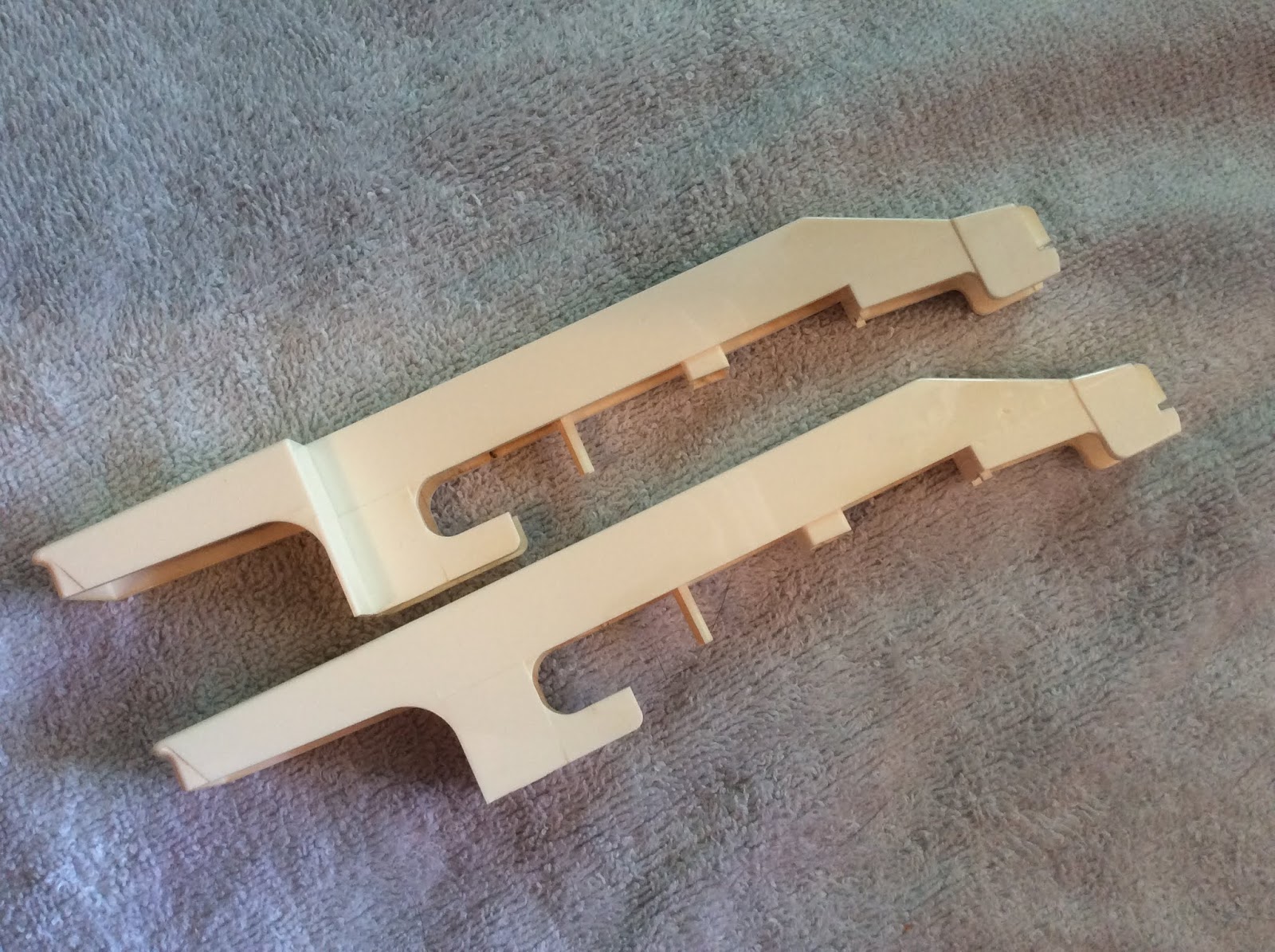
Next I worked on the key-bed. Every key was removed from the frame. I found it easiest to turn it upside down for this step, removing white keys first, then black. If you wiggle a small flat-head screwdriver between the prongs where the key hinges while pulling the key towards you it will loosen its grip and the key will drop out (oftentimes a little push on the clamping part helps it along). This way the little spring clip that holds the key in place drops into the body of the key when you remove it, making it easy to retrieve. The clamping prongs have long been broken on three of the keys, and there's not much I can do about that beyond replacing the keys altogether. Perhaps another time. They still work but are just a little wonky. I somehow managed to snap one of the struts that presses down on the key contacts while removing one key, and repaired it with epoxy and a piece of paperclip for reinforcement. It amazes me that a part so integral to the working of the keyboard is relatively thin and easily breakable, compared to the rest of the key.

Removing the keys.

Keys removed.
 Each key was individually washed, in a solution of Mr. Clean and hot water, then rinsed in plain hot water and dried. This took about an hour, but was worth it. The keys were absolutely filthy: the sides felt like sticky sandpaper.

Brown!
After cleaning.
The metal frame was similarly grubby. Dirt, detritus, the ubiquitous tobacco goo, and quite a bit of rust was caked on it. I also gave it a wipe down and hit it with a bit of compressed air.

The initial state of the keyboard frame. The brown lines correspond to gaps in the keys.
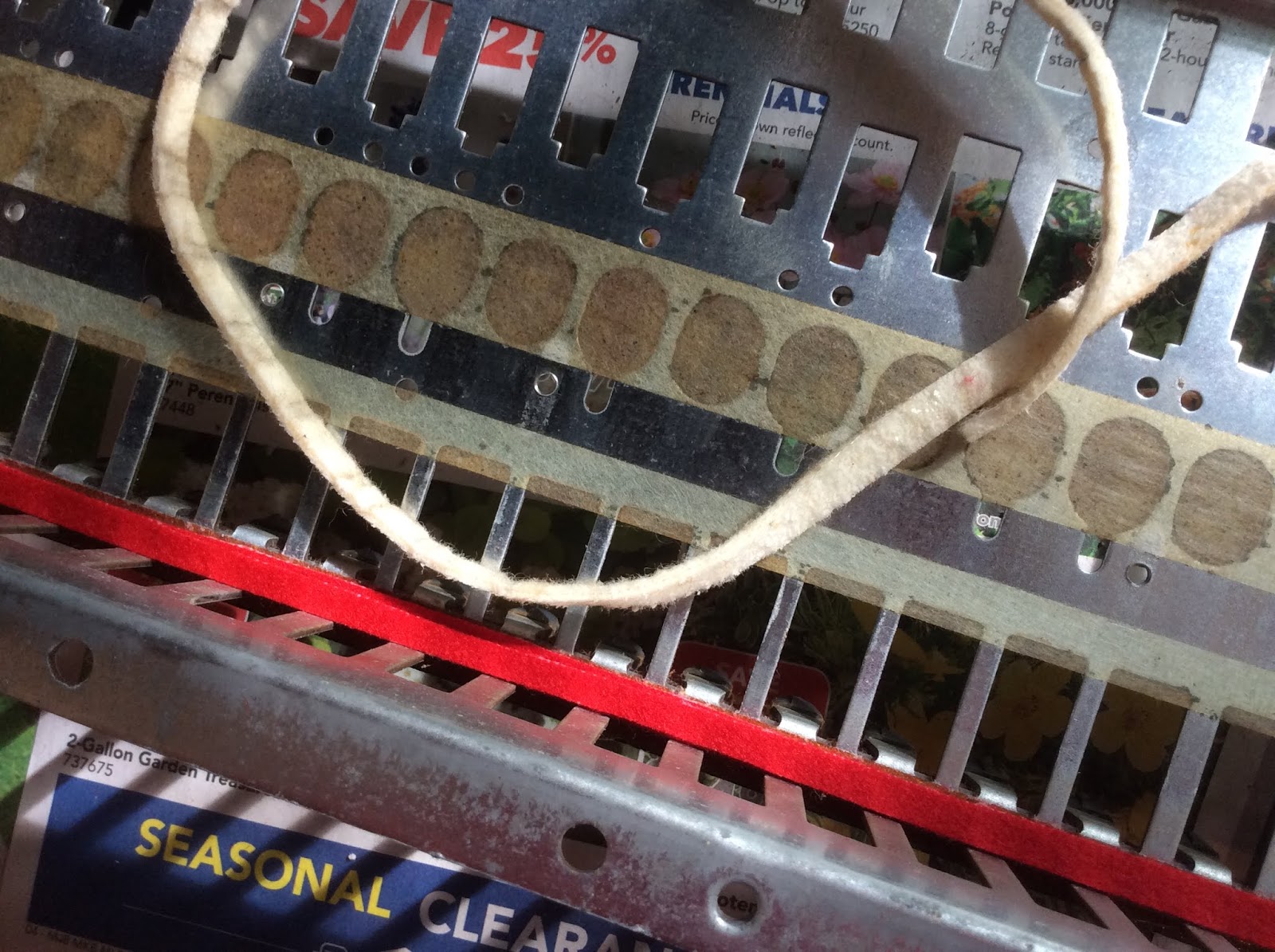
Before reassembly, I replaced the action felt underneath the key-bed. I was keen to replace the top layer, too, but as there's a conductive strip underneath for controlling aftertouch, as well as a layer of some sort of rubber, I left it as-is. The felt I ordered turned out to be half the thickness of the original, so I cut it in half and doubled it. The action is still not amazing, but just having clean keys makes it so much nicer.

New felt.
New felt vs. old felt.
I addressed the cigarette burns in the two very top keys (see the previous DW-8000 post) by carefully shaving the lumps down with a Stanley knife and hitting them with a bit of fine-grit sandpaper (masking off with tape first). They're not 100%, but most of the deformation and discoloration is gone and they're much nicer to look at.

Treated cigarette burn.
Each key contact has a little rubber pad that the key presses down on. These were covered in gunk, but as their function is mechanical rather than electrical, it wasn't necessary to clean them. In the interest of being thorough, I gave them a swab with some distilled water. I cleaned the rest of the contact assembly circuit-board while I was at it, at least to get the worst of the gunk off.

Key contact assembly: note gunk on black rubber pads and black specks on circuit board.
Not perfect, but here's how it came up after swabbing.
Last but not least, it was time to put everything back together. The key-bed was reassembled in reverse order: black keys first, then white; aftertouch board reattached, all circuit-boards re-housed in casing, key-bed re-seated, and finally the connectors plugged back into the lower half of the keyboard, battery installed, and everything screwed back together.

Circuit-boards going back in.
Key-bed reassembly.
Reinstalling the key clips. I recommend wearing gloves to spare your fingers!
Key-bed reassembled.
Ready to reattach connectors. Note the labels so I could get them back in the right spot!


With everything back together, came the moment of truth. Does it still work? Were my improvements a success? Thankfully, yes on both counts. It powered on with no issues. Without the presets loaded into memory, it made a pitch drop sound upon pressing a key. I sampled this sound on middle C, C2 and C1 for posterity. I'll be providing free downloads via freesound.org in a future edit of this post.

The Korg DW-8000 is equipped with MIDI, but I was unable to find the Bank A factory presets in sysex format anywhere on the web. However, an audio file in machine language can be found here, and was successfully loaded via the tape data input.

I'll leave you with this short video: factory program number 77 proving a successful re-loading of the factory presets and fully functioning unit!

Thursday, April 25, 2019

Disco Antenna - Smalltown Boy [Bronski Beat cover]


JLA presented me with a backing track and lead vocals for this Hi-NRG version of a classic club track from 1984, originally by the UK band Bronski Beat. I've often thought JLA could do a great job of matching Jimmy Somerville's unique voice, and he doesn't disappoint. I worked some production magic on it, adding backing vocals, synths, strings, and bass guitar. We both feel we've not only done the original proud but put a unique spin on it into the bargain. We hope you enjoy the free download.

Soundcloud Player:

Youtube:

No More Cries: Seven EP


No More Cries have had a busy winter working on their double album. In early spring we picked seven of the more polished songs for an E.P. and CD release party. Limited to 100 CDs produced in-house and also available on bandcamp as a digital download.

Bandcamp Player:

We were given a one page write-up in our local paper, The Cariboo Observer, about the release party, which you can read here.

Thursday, January 3, 2019

2018: Year In Review

MS-20 + Talk Box
2018 was, surprisingly, a creative year for me. Here is a run-down of the audio-related projects I was involved in:

-Mixed six No More Cries songs for a film project (none were used - but they'll end up on the double album in the works). Recorded roughly 10 more backing tracks for the album to add to the 12 or so already in the can.
-Mixed and mastered Danny Brickell's debut CD, and recorded 8 or so tracks for his follow-up.
-Mixed an EP's worth of songs for Jessica Harvey, recorded three new tracks for her.
-Recorded (and filmed) around 7 songs for Chad Stump, and contributed keyboards and vocals to his wedding song.
-Recorded five songs for Meredith Higgins, for which there is some session work in-progress.
-Remixed 'Our Revenge' for Zwaremachine.
-Remixed a song for Schultz (yet to be released).
-Composed a complete backing track for Taylor Waters (yet to be released).
-Mastered four Disco Antenna songs for one-off lathe-cut vinyl and subsequent digital EP.
-Remastered Disco Antenna's 'Side A' and 'Side B' for the forthcoming full-length album (to be released 2019).
-Made a new sound collage for The Manitou's 'Atmospheres', and mastered the album (to be released 2019).
-Wrote one song for The Manitou's 'Dreams of Sleeping Engines', recorded vocals for six songs. This album is in the mastering stage.

Have I forgotten anything? Probably. 2019 will see at least three of my albums come to light, and hopefully the long-awaited debut from No More Cries as well.

Things are also looking bright for some Audio Drama work this year. Watch this space!

Monday, December 31, 2018

Digtal EP - Disco Antenna - The Vinyl Experience


It's been a busy creative year, and there are many releases I'm involved with waiting in the wings. Disco Antenna's first full-length album is almost complete. To tide you over, we've released something a little different: The Vinyl Experience EP.

It's been a dream of ours to have our music on a vinyl record, and this year we got the chance to have two lathe-cut vinyl records made (one for JLA and one for myself) at littleelephantlathecuts.com who I highly recommend if you're looking to have something like this made. Mastering for vinyl was an interesting process, and although it didn't turn out perfect, it came pretty close. These lathe cuts are of fantastic quality, and can be ordered in batches or one-offs, making them far less expensive than pressed vinyl (which are usually bulk-order with a long waiting time). They still aren't cheap, so it's not cost-effective (yet) to produce enough to sell.

To share the experience of playing one of these special gems, the vinyl has been digitized and EQ mastered, with all pops, clicks, hisses, and hums left intact for that authentic vinyl experience. The resulting recordings make up The Vinyl Experience EP and accompanying videos of the digitizing session. The EP is yours for free via our Bandcamp page.

Bandcamp player:

Video, Side 1:


Video, Side 2:


Friday, March 16, 2018

Remix: Zwaremachine - Our Revenge

Image courtesy of Zwaremachine.
My plan to finish the new Manitou album in February was scuppered by a bout of the flu, which prevented me from singing for the rest of the month. I'm now back at work on No More Cries' debut album.

One project I was able to find time for was a remix for an old friend who's put a new industrial/EBM band together called Zwaremachine. Their minimal approach gave me plenty of room to add melodies and other sonic goodness. The song is called 'Our Revenge', and (for now) can be heard exclusively on Ghost Wave Radio Show #20. It's the second song. It was such a fun track to work on, so I hope you like it!

Zwaremachine's E.P. 'Be A Light' comes out on May 1st, on CD and cassette no less. But in the meantime, you can preview three tracks via Bandcamp, and find various other teasers on their FaceBook page.

Bandcamp Player: